What Developmental Signs Show a Child Is Ready to Move Up?
Children grow remarkably fast in their first two years of life. Most infants entering day care are just six weeks old, still building trust with caregivers and mastering the basics of sleep, feeding, and sensory exploration. By around 12 to 15 months, however, many children begin showing clear signs that they are ready for a more active, social setting.
Watch for these readiness cues:
- Pulling up to stand and taking first steps independently.
- Attempting simple words or sounds to communicate wants and needs.
- Showing curiosity about other children and trying to interact with them.
- Beginning to imitate actions, like clapping or waving, after watching others.
- Demonstrating the ability to follow simple one-step directions.
No two children hit these markers at exactly the same age. The shift from infant day care in Bolingbrook, IL, to a toddler room typically happens somewhere between 12 and 18 months, though caregivers and families make this call together based on the individual child.
What Does a Quality Toddler Classroom Actually Look Like?
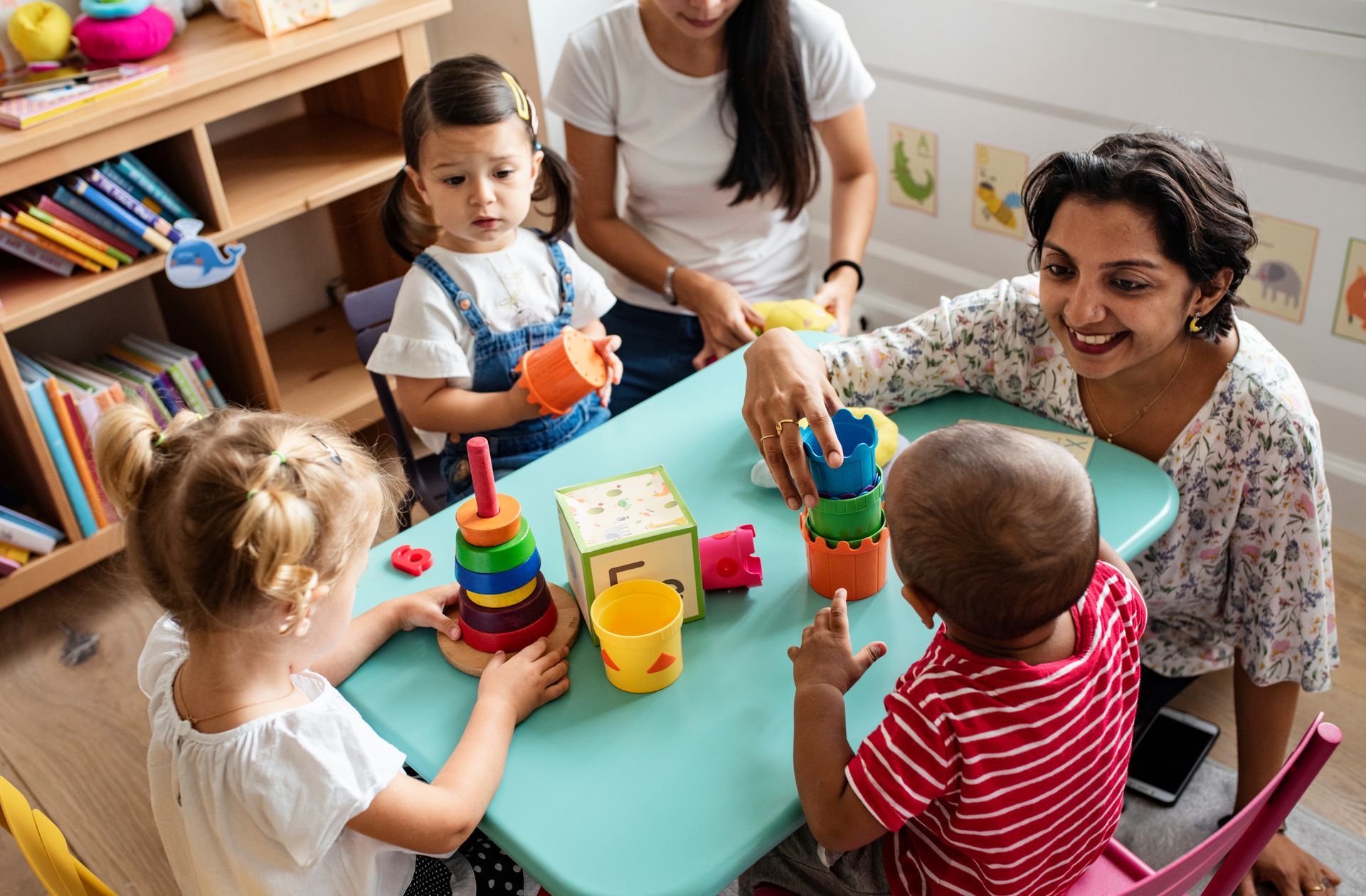
A toddler classroom is purposefully different from an infant room. The environment shifts from one-on-one nurturing to structured group experiences that gently stretch social, language, and motor skills.
A well-designed toddler day care program typically includes:
- Circle time with songs, stories, and guided conversation to build early language skills.
- Sensory and dramatic play stations that encourage creative exploration.
- Gross motor activities like movement games and outdoor time to support physical development.
- Group meals and snack routines that teach independence and social interaction.
- Short, structured learning activities matched to toddlers' naturally brief attention spans.
The goal is not to rush academics but to create a safe, predictable rhythm where toddlers can build confidence, vocabulary, and the ability to relate to peers.
How Can Parents Help Ease the Change?
Transition anxiety is real for both children and parents. A few simple strategies can reduce stress during the move from infant day care to a toddler program.
Talk about the new classroom before the first day using simple, positive language. Visit the toddler room together so the space feels familiar before the official transition begins. Ask caregivers to share the toddler daily schedule so you can mirror routines at home. Consistency between home and school environments can help children settle in faster. Most toddlers adapt within a few weeks when they feel secure and supported.
Ready to Learn More About Programs Near Bolingbrook?
Families near Bolingbrook, IL, looking for a program that thoughtfully bridges the infant-to-toddler gap can explore what
Lighthouse Academy has to offer. Serving the Bolingbrook area, Lighthouse Academy designs its toddler day care experience to build directly on infant day care foundations, introducing structured play, language immersion, and social skill development in a familiar, nurturing setting. Browse the
infant care program to understand where the journey begins, or
contact the team to schedule a tour and ask questions specific to your child's readiness.